


Dog with a dental chew toy, effective at-home oral care for dogs.
Dog owners surely understand that good teeth directly relate to the overall health of their furry companions. But when it comes to brushing your dog's teeth, it can be a task that leaves the owner exhausted and the dog resisting. This is when dental chews become a "lifesaver" for many.
But have you really chosen the right dental cleaning stick? The products on the market are mixed, and some not only do not protect teeth, but may also hurt the stomach and increase the burden on the body.
Today, I have compiled this complete guide to veterinary certified dental cleaning sticks, from whether it is useful, how to choose, how to feed, to whether it can be eaten in special cases, all the issues you care about are clear at once, and novice shovelers can also directly copy homework.
Are dental chews good for dogs?
It's really good, but only if you choose the right product. Dental Chews have a double benefit for dogs:
l Oral health: They can effectively reduce the buildup of plaque and tartar, relieving bad breath.
l Mental health: Chewing is in dogs' nature, and teething sticks can be used as a healthy way to decompress, helping them kill time and reduce behaviors such as home demolition.
Do dental chews actually work?
Dental chews do work. They work similarly to a toothbrush. When a dog chews the chewy chew, its teeth penetrate the chew, and the physical friction removes plaque from the surface of its teeth. If your dog swallows it after a few seconds, it's just a treat. You need to chew it for 2-5 minutes to achieve the desired cleaning effect.
High-quality dental chews reduce plaque and tartar buildup through physical friction during chewing; many also contain antibacterial ingredients to improve bad breath and prevent minor periodontal problems.
What are the worst dental chews for dogs?
Many owners think that the ingredients are safe, but this is not the case. The worst toothwashing sticks usually have the following characteristics:
l Too hard texture
There is a knee test in the veterinary world. If you hit your knee with a toothbrush and it hurts, it's too hard. Antlers, real bones, and hard nylon bones often cause dog teeth to break.
l Improper size
Improper sizing is the most common mistake. Giving small teething sticks to large dogs can lead to misswallowing and intestinal obstruction; Feeding a puppy a large size can damage the jaw.
l High in calories/sugar
Dental cleaning sticks with a lot of starch and sweeteners can lead to obesity and even induce pancreatitis.
Do vets recommend dental chews for dogs?
In the pet clinic, this is one of the most frequently asked questions by dental professionals.
Yes, veterinarians do recommend them, but they don't recommend all toothbrushes; rather, they recommend oral care tools that meet specific standards.
1. Look for the VOHC lables
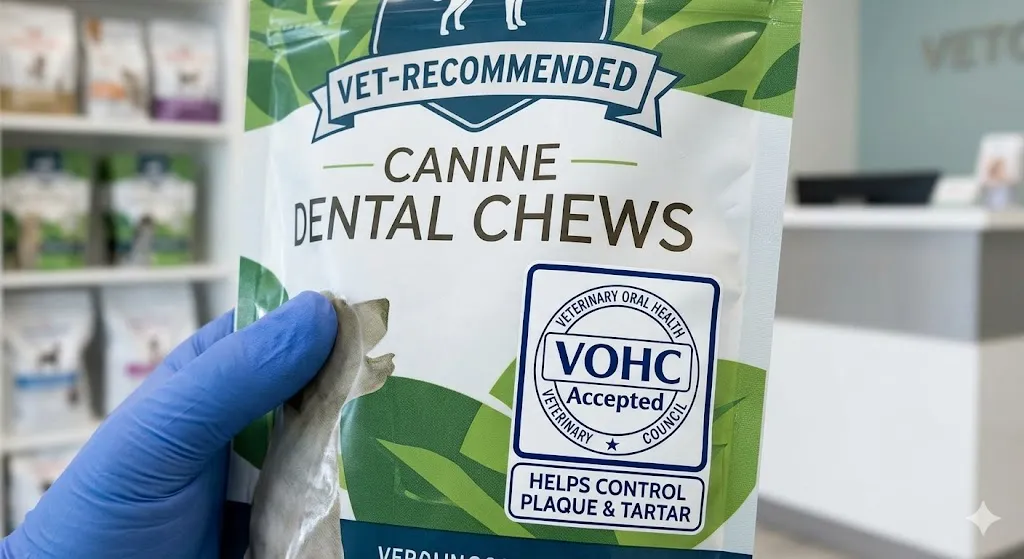
Vets will specifically emphasize VOHC certification when recommending products. This logo is authoritatively certified by the International Veterinary Oral Health Council, representing that the product has been clinically proven to effectively reduce plaque and tartar in dogs and cats, and is a professional quality mark of pet oral care products.
2. What is VOHC?
VOHC is an independent international authoritative organization with extremely stringent certification standards. As VOHC explicitly states in its official guidelines: "Daily chewing activities can also be effective in maintaining oral health. Daily use of products that have been awarded the VOHC Seal will help to keep your pet's teeth clean and the gum tissues healthy."
Only products that have undergone rigorous clinical trials and proven to effectively reduce plaque or tartar by more than 15% are allowed to bear the blue VOHC label. This means that if a product does not have the VOHC label, it may simply be a regular hard snack, not a genuine oral care product.
Vet recommended dog dental chews
Among the many teething stick products, the following 4 are strictly certified by VOHC and are highly recognized choices in veterinary clinical practice, each with its own targeted advantages, which can be selected according to the dog's condition:
1. Virbac C.E.T. VeggieDent: The classic Z-shaped design deeply cleans between teeth while chewing, while using a highly digestible formula, making it safe for dogs with sensitive stomachs to eat.
2. Greenies: Known for its ultra-high palatability, the vast majority of dogs can take the initiative to accept it, and it is the first choice for dogs that resist brushing.
3. Whimzees: 100% natural ingredients, no artificial additives, unique shape can prolong chewing time, while low fat and low calorie, suitable for dogs who need to control their weight and are at risk of pancreatitis.
4. Purina Pro Plan Dental Chews: After multiple rounds of clinical verification, it has outstanding descaling ability and can effectively delay the formation of tartar.
Dental chews are only one part of a dental care routine and cannot completely replace brushing. Brushing is the most effective way to clean a dog's mouth. However, if your dog resists brushing, you can use the Vilipets pet dental gel and dental wipes combo: the gel replaces brushing by dissolving plaque directly when applied; the wipes are used for daily cleaning, wiping teeth after meals. This two-pronged approach easily protects your dog's oral health.
Frequently asked questions
Q1: What do vets recommend for dogs with pancreatitis?
Dogs with pancreatitis must have their fat intake strictly limited. Low-fat, plant-based VOHC-certified dental chews like Whimzees are generally safe, but avoid high-oil products made from animal hides.
Q2: How often should I feed my teething sticks?
It is recommended to feed one toothbrush per day. Remember to reduce the amount of staple food consumed that day according to the calorie content of the toothbrush.
Q3: Why does my dog still have bad breath after eating dental chews?
Dental chews can only remove soft debris above the gum line, helping to reduce plaque and mild tartar. If your dog already has severe tartar or periodontitis, dental cleaning sticks will be completely ineffective, and it is recommended to consult a veterinarian for professional dental cleaning.